
BPC-157, TB-500, and growth-hormone peptides. Supervised by a physician.
BPC-157 for tissue repair. Ipamorelin and CJC-1295 for growth-hormone optimization. PT-141 for libido. We protocol the peptides that have meaningful evidence, and skip the ones that don't.

Peptides are short chains of amino acids that act as signaling molecules. The therapeutic peptides we use target specific biological pathways: tissue regeneration, growth-hormone-axis modulation, and centrally-acting libido enhancement. The category has been hyped and oversold, but used selectively, peptides are useful clinical tools.
The principle that drives our peptide protocols: a peptide should match a specific clinical goal. We don't stack indiscriminately and we don't recommend peptides that have neither evidence nor a defensible mechanism.

We pick what fits the clinical question, not what's trending.
Body Protective Compound. Tendon, ligament, and GI lining repair. 4–8 week protocols, often the first peptide considered for chronic tendinopathy.1
Thymosin beta-4 fragment. Soft-tissue regeneration; commonly paired with BPC-157 for orthopedic recovery protocols.2
Pulsatile GH release via dual mechanism (ghrelin mimetic + GHRH analog). Sleep, body composition, recovery. Standard 6-month protocol.
GHRH analog. Older, well-studied, more affordable GH-axis support.
FDA-approved GHRH analog for HIV-associated lipodystrophy.3 Used selectively off-label for visceral fat reduction in metabolic syndrome.
Centrally acting melanocortin agonist. Useful for psychogenic or mixed-component ED and for libido restoration when hormonal optimization alone falls short.4

Half the problem with the peptide market is the supply chain. Vials sold online as "research only" are often unverified, sometimes contaminated, and never accountable to a regulator.
Every peptide we use is sourced through a licensed compounding pharmacy with documented sterility and identity testing. You inject what the label says — at the dose your protocol calls for.
Most common. Mild injection-site reactions, transient headache, and brief fluid retention with GH-axis peptides during the first few weeks.
GH-axis peptides. Theoretical concern with stimulating GH/IGF-1 in the setting of malignancy. We screen for personal and family history before starting and monitor IGF-1 on protocol.
PT-141. Flushing, transient hypertension (about 6 mmHg), and nausea are well documented. Not for men with poorly controlled hypertension or recent cardiovascular events.


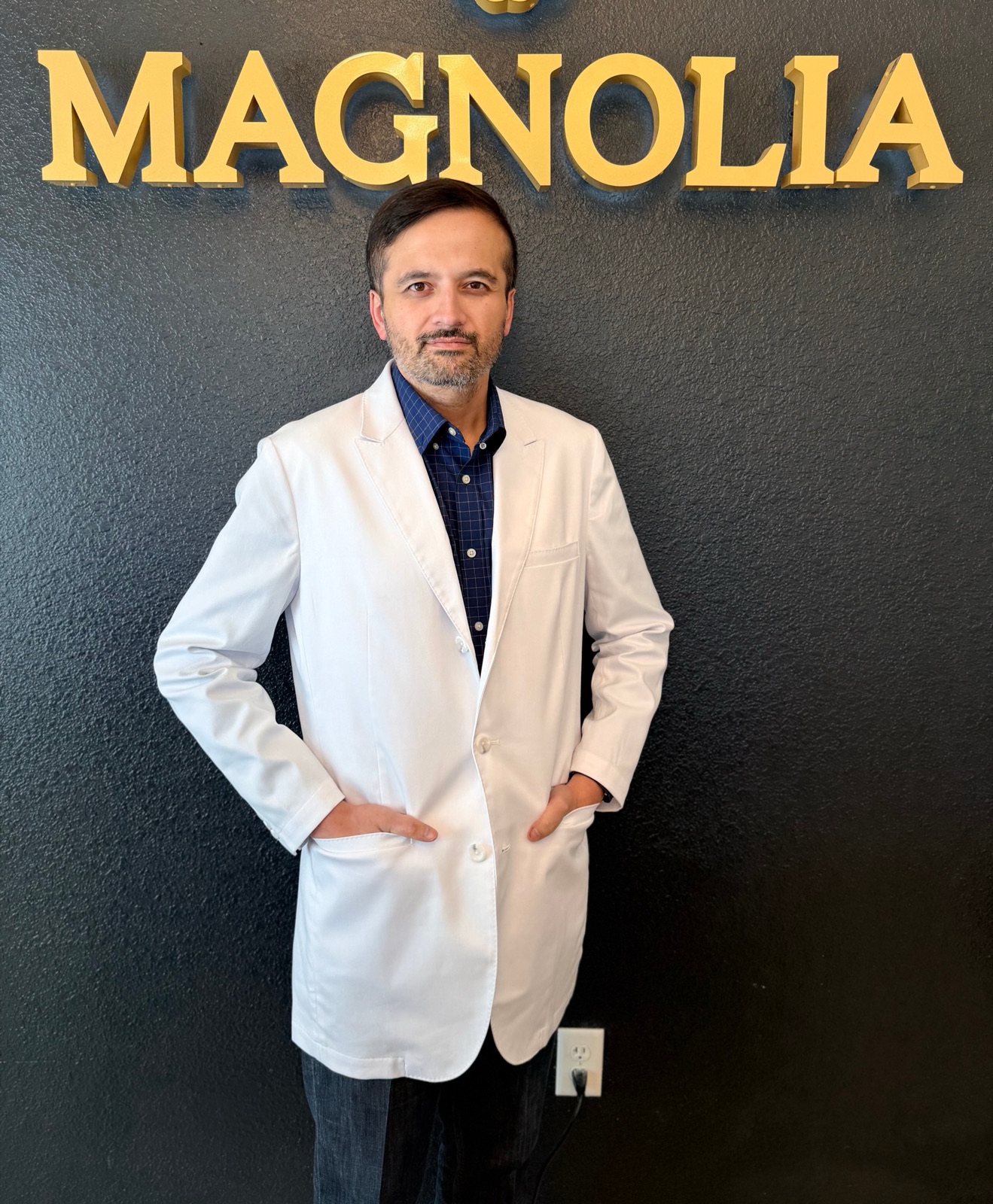
Dr. Abdullah is a board-certified internal medicine physician based in Southlake, TX, and an IFM-certified functional medicine practitioner. He focuses on men's hormone health — testosterone optimization, GLP-1 weight loss, sexual health, peptides, and longevity — and personally reviews and adjusts every protocol that leaves the clinic.
Fifteen-minute free first visit at our Southlake clinic. Serving Westlake, Trophy Club, Colleyville, Keller, Grapevine, Roanoke, and the broader Dallas–Fort Worth metro.
or call (817) 749-6946