
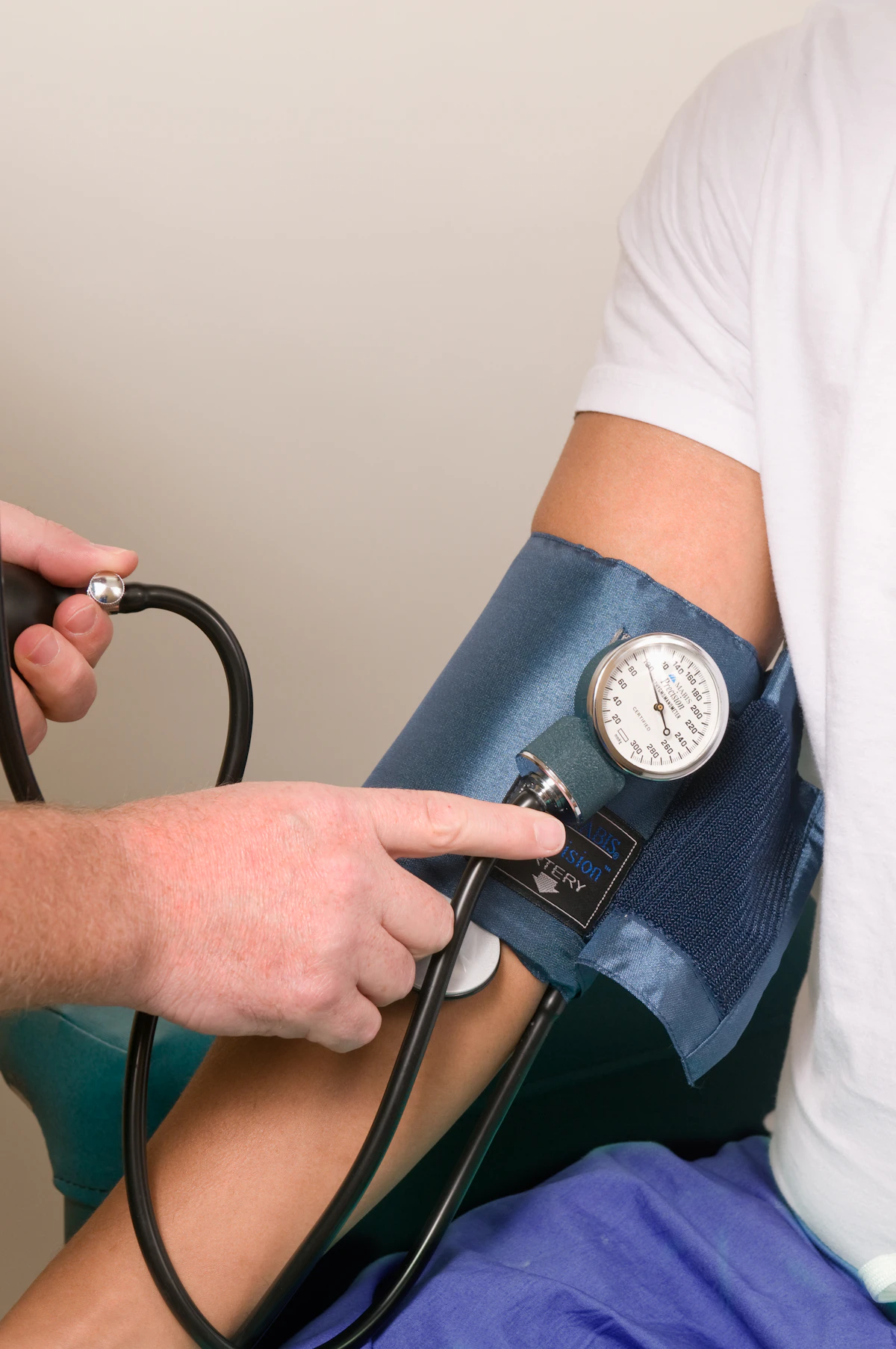
I check blood pressures all day. In the hospital, it's the first vital sign I glance at when I walk into a room. At my clinic in Southlake, it's one of the first numbers we capture before we ever start talking about hormones or anything else. So when a man sits across from me and tells me his erections have been going downhill for the past couple of years, one of my first questions isn't about testosterone. It's about his blood pressure.
There's a reason for that. Hypertension is one of the most common causes of erectile dysfunction I see in practice, and it's also one of the most overlooked. Studies over the past two decades consistently show that somewhere around half of men with high blood pressure report some degree of ED. Half. And most of them were never told the two conditions have anything to do with each other.
Let's fix that today.
Why Does High Blood Pressure Cause Erectile Dysfunction?
High blood pressure damages the inner lining of blood vessels, stiffens artery walls, and reduces nitric oxide production. Erections depend on small penile arteries relaxing and rapidly filling with blood. When years of elevated pressure wear out that machinery, blood flow drops and erections become softer, slower, and less reliable.
An erection is a vascular event. Full stop. Your brain sends the signal, sure, and hormones set the stage, but the actual mechanics come down to blood flow. When things are working properly, the arteries feeding the penis dilate and blood flow increases six to eight times over baseline within seconds. The erectile tissue fills, the veins that normally drain it get compressed shut, and pressure builds. That's an erection. It's plumbing, executed beautifully.
Now picture what years of elevated pressure does to that plumbing. Blood slamming through arteries at higher force than they were designed for, day after day, year after year. The vessel walls respond the way any stressed tissue does: they thicken, they scar, they stiffen. The delicate inner lining, called the endothelium, takes the worst of it. And the endothelium happens to be exactly the tissue responsible for producing nitric oxide, the molecule that tells penile arteries to relax and open.
Less nitric oxide, stiffer arteries, narrower channels. You can see where this is going. I wrote a whole piece on the role blood flow plays in erectile dysfunction if you want the deeper mechanics, but the short version is simple: an erection is a blood flow test, and hypertension makes you fail it slowly.
What Does Hypertension Actually Do to the Arteries That Matter?
Chronic high pressure injures the endothelium, drives plaque formation, and remodels artery walls so they can't dilate on demand. Penile arteries are only one to two millimeters wide, so they show damage years before larger vessels do. That's why erection changes often appear first.
It wears out the endothelium first
The endothelium is a single layer of cells lining every blood vessel in your body. Thin, fragile, and wildly important. Under constant high pressure, those cells get battered. They become inflamed. They produce less nitric oxide and more of the substances that promote clotting and constriction. Doctors call this endothelial dysfunction, and it's essentially stage one of vascular disease. Before there's any visible plaque, before any blockage a scan would catch, the vessels have already lost their ability to relax properly.
Then it narrows the smallest pipes
Here's the detail that changes how you should think about ED. The arteries supplying the penis are about one to two millimeters in diameter. Your coronary arteries, the ones that cause heart attacks when they clog, run three to four millimeters. The carotids feeding your brain are five to seven.
Same disease process, different pipe sizes. A 30 percent narrowing that a coronary artery can shrug off for years will meaningfully choke a penile artery right now. The penis isn't uniquely vulnerable. It's just the smallest canary in the coal mine. Which is why the connection between heart disease and erectile dysfunction is one of the most consistent findings in men's health research, and why I take new-onset ED seriously as a cardiovascular signal, not just a bedroom problem.
Add diabetes or prediabetes to the mix and the damage compounds fast. High glucose and high pressure attack the same vessels through overlapping pathways, which I covered in detail in my post on how diabetes affects erectile function. A lot of the men I see have both conditions brewing at once, often without knowing it.
Can Blood Pressure Medications Make ED Worse?
Some can. Older thiazide diuretics and non-selective beta-blockers are the classic offenders, reducing blood flow or blunting the signals erections depend on. ACE inhibitors, ARBs, and calcium channel blockers are generally erection-neutral. Never stop a medication on your own; switching classes is usually the better move.
This is the cruel irony that frustrates a lot of my patients. A man finally gets his blood pressure treated, which should help his erections long-term, and within a month things get worse in the bedroom. So he quietly stops taking the pills. I've heard this exact story more times than I can count, and it usually comes out only after some careful questioning.
Here's the honest breakdown. Thiazide diuretics (like hydrochlorothiazide) have the strongest evidence for worsening erectile function, likely through reduced blood volume and some direct vascular effects. Older beta-blockers like propranolol and atenolol can blunt the sympathetic signaling involved in arousal and reduce peripheral blood flow. Newer beta-blockers like nebivolol actually increase nitric oxide and appear far friendlier.
Meanwhile ACE inhibitors, ARBs (losartan, valsartan), and calcium channel blockers are largely neutral, and there's decent data suggesting losartan may modestly improve sexual function in hypertensive men. So if your ED started or worsened shortly after a new prescription, that's not a reason to abandon treatment. It's a reason to have a specific conversation with your doctor about swapping classes. Please don't just stop. Rebound hypertension is dangerous, and I've admitted people to the hospital for exactly that.
Why Is ED Often the First Warning Sign of Heart Trouble?
Because artery damage shows up in the smallest vessels first, erectile dysfunction typically appears three to five years before a heart attack or stroke in men with vascular disease. Treating ED without checking blood pressure, cholesterol, and metabolic health misses the warning entirely.
Wearing my hospitalist hat, I've cared for plenty of men in their fifties admitted with chest pain or a full heart attack. When I take a careful history, a striking number of them mention that their erections faded years earlier. Nobody connected the dots. They got a pill for the symptom, or they got embarrassed and never mentioned it, and the underlying vascular disease kept marching along.
The literature backs this up: ED precedes coronary events by roughly three to five years on average in men whose ED has a vascular cause. That window is a gift. It's enough time to get blood pressure controlled, cholesterol addressed, and metabolic health turned around before anything catastrophic happens. This is exactly why my men's heart health guide treats erectile function as a cardiovascular vital sign. And it's why this matters even more for men over 50, where erectile dysfunction after 50 is too often dismissed as "just aging" when it's actually treatable vascular disease announcing itself.
How Do You Fix ED When Blood Pressure Is the Root Cause?
Treat the vessel, not just the symptom. Get blood pressure genuinely controlled, address the metabolic drivers behind it, review medications for erection-unfriendly classes, and layer in targeted therapies like PDE5 inhibitors or shockwave treatment while the underlying vascular health recovers. Combined approaches consistently outperform any single fix.
Control the number, and confirm it's actually controlled
Plenty of men are "on blood pressure medication" and still running 145/95 at home. Office readings miss a lot. I like home monitoring: a validated arm cuff, seated readings morning and evening for a week. If your average is above 130/80, there's work to do. Getting from poorly controlled to well controlled is one of the highest-yield things you can do for your erections, your heart, and your brain all at once.
Fix what's driving the pressure
Hypertension rarely travels alone. Excess weight, insulin resistance, untreated sleep apnea, and a few too many drinks per week are the usual suspects, and each one independently damages erectile function too. Weight loss deserves special mention, because losing even 10 percent of body weight can drop systolic pressure meaningfully. For men who qualify, GLP-1 medications can help on both fronts at once; I wrote about how GLP-1 therapy lowers blood pressure if you want the specifics.
Use targeted ED treatment while the vessels heal
Vascular repair takes months, and nobody wants to put their sex life on hold that long. This is where a well-designed ED treatment plan earns its keep. PDE5 inhibitors (sildenafil, tadalafil) work with your remaining nitric oxide to open vessels on demand, and they're generally safe alongside blood pressure medications as long as nitrates aren't involved. For men who want to address the vessels themselves, options like shockwave therapy aim to stimulate new blood vessel growth rather than just borrowing function for the evening. I compared the full menu of options in my post on whether ED can be reversed without Viagra.
If you're weighing where to get care, I'd rather you go somewhere that measures and treats the underlying vascular problem than a script mill that mails pills without ever taking a blood pressure. I put together a rundown of the best ED clinics in DFW with exactly that lens, and our erectile dysfunction treatment guide walks through every option in plain English. We see men from all over the metroplex for this, including plenty who drive in for ED treatment from Fort Worth because they want a physician looking at the whole picture, not just the prescription pad.
Frequently Asked Questions
Yes. Hypertension damages arteries silently for years before you feel anything. Erectile changes are often the first noticeable sign, showing up while your blood pressure still feels like a non-issue.
Older thiazide diuretics and non-selective beta-blockers are the most common offenders. ACE inhibitors, ARBs, and calcium channel blockers are generally erection-neutral, and losartan may even help slightly.
It often improves, especially when caught early. Long-standing hypertension causes structural artery changes that take longer to heal, which is why combined treatment usually beats blood pressure control alone.
No. Stopping suddenly can be dangerous. Talk to your physician about switching to an erection-neutral class instead; there are usually several good alternatives.
It can be. Penile arteries narrow before coronary arteries, so ED often precedes cardiac problems by three to five years. New ED deserves a cardiovascular risk assessment, not just a pill.
If your erections have changed and you haven't had your blood pressure properly evaluated, that's worth 15 minutes of your time. Come see us. The first visit is free, we'll check the numbers that actually matter, and you'll leave with a straight answer about what's going on. Book your free consultation here.
Dr. Farhan Abdullah, DO
Board-certified internal medicine physician and IFM-certified functional medicine practitioner. Founder and medical director of Magnolia Men's Health in Southlake, TX.
Read full bio →Talk to a physician about your goals.
Free 15-minute visit with the medical director. No commitment. No pressure. Just an honest conversation.
All inclusive