
P-Shot and Softwave shockwave. Performed by a physician.
P-Shot (PRP), softwave/shockwave therapy, and combination protocols. We use these adjunctively for vasculogenic ED and for men who want sensitivity or tissue-regeneration outcomes that medication can't provide.
The P-Shot (Priapus Shot) is platelet-rich plasma drawn from your own blood and injected into the corpus cavernosum and glans under local anesthetic — single in-office procedure, $1,700–$1,900, results peak at 3 months and durable through 12–18 months. Softwave shockwave therapy delivers low-intensity acoustic pulses to penile tissue, stimulating microvessel growth — 6 sessions over 3 weeks, $1,800. The two stack well; many patients combine both for compound effect.
The P-Shot delivers concentrated growth factors directly into penile tissue via PRP injection, supporting regeneration of microvasculature and connective tissue over 8 to 12 weeks. Softwave shockwave therapy delivers low-intensity focused acoustic waves that stimulate neoangiogenesis (new microvessel growth) and tissue remodeling across multiple sessions. They work on different mechanisms, which is why the combination tends to outperform either alone.3
Most men come to penile rejuvenation after a partial PDE-5 response, after noticing reduced sensitivity, or after a vascular workup that flagged early atherosclerosis. The P-Shot and Softwave protocol provides a regenerative path before more invasive interventions are considered.

Each works on tissue mechanics differently. Layered, the outcomes are stronger than either alone.
PRP drawn from your blood, processed in-house, and injected under topical anesthetic into specific penile sites. Single visit, ~30 minutes. Effects develop over 8 to 12 weeks.1
Low-intensity focused acoustic energy stimulates new microvessel growth (neoangiogenesis) in penile tissue. Multi-session series, no anesthesia. Strongest evidence in mild-to-moderate vasculogenic ED.2

Most clinics that offer the P-Shot ship blood to an outside lab — your visit becomes a two-step appointment days apart, and the PRP you receive is sometimes pre-mixed product, not yours.
We draw, spin, and inject in the same room. Topical numbing is applied before the injection itself. The full visit takes about 30 to 60 minutes; sexual activity typically resumes the next day.
P-Shot. Performed under topical numbing. Mild swelling for 24–48 hours; bruising in some men. Sexual activity typically resumes at 24 hours. Because PRP comes from your own blood, allergic reactions are exceptional. Not appropriate during active genital infection or for men with active bleeding disorders.
Softwave shockwave. Non-invasive, drug-free. Most men describe sensation as a tapping pressure, no anesthesia required. Rare: transient bruising or mild discomfort post-session. Not appropriate during active genital infection.


The P-Shot — short for Priapus Shot — is a regenerative medicine procedure derived from the broader category of platelet-rich plasma (PRP) injection therapy. The mechanism is autologous: we draw 30–60 mL of your blood, spin it in a calibrated centrifuge to concentrate the platelet fraction, and inject the resulting growth-factor-rich plasma into specific anatomic targets within the penis under local anesthetic. The growth factors carried by the platelets — PDGF, VEGF, TGF-β, EGF, IGF-1 — trigger angiogenesis (formation of new microvessels), recruit local stem cells, modulate inflammation, and over the following weeks drive a tissue remodeling response.
The clinical effects develop on a predictable timeline. Most patients begin to notice improvement at 3–4 weeks post-procedure: stronger morning erections, more reliable spontaneous erections, improved sensitivity. Peak effect is typically at 3 months, with durable improvement extending to 12–18 months in most cases. Some men do an annual maintenance shot; others do a single shot and never need another. Combining with a Softwave shockwave series during the same window — which we frequently recommend — tends to extend the durability and amplify the magnitude of the response.
A typical P-Shot appointment runs 60–90 minutes start to finish. We confirm the indication, draw blood from the antecubital vein, and start the centrifuge. While the centrifuge runs (15–20 minutes), we apply a topical anesthetic cream to the injection sites and prepare the local anesthetic injections. Once the PRP is ready, we administer two to three local anesthetic injections at the base and along the shaft to fully numb the area — this is the part patients describe as "pressure" rather than pain. The PRP is then injected at five sites along the shaft and into the glans using a small-gauge needle. Total injection time is under 5 minutes. Most patients drive themselves home immediately afterward.
Recovery is straightforward. Mild soreness or bruising at the injection sites for 24–48 hours is normal — it's the inflammatory response that drives the healing cascade. We ask you to avoid NSAIDs (ibuprofen, naproxen, aspirin) for 7 days before and 14 days after the procedure since anti-inflammatories blunt the cascade that makes PRP work. Acetaminophen is fine. You can have intercourse the same evening if you choose, though most patients wait 24 hours.
Strongest evidence: mild-to-moderate vasculogenic erectile dysfunction. Multiple peer-reviewed studies show meaningful improvement in International Index of Erectile Function (IIEF-5) scores, EHS (Erection Hardness Score), and patient-reported satisfaction at 3, 6, and 12 months post-procedure.
Solid evidence: Peyronie's disease (penile curvature and palpable plaques). PRP appears to soften plaques and reduce curvature in a meaningful subset of patients, particularly when combined with traction therapy and shockwave. Best results are in early-stage disease before plaques have fully calcified.
Promising evidence: reduced sensitivity post-prostatectomy, post-radiation ED, and erectile dysfunction in the context of well-controlled diabetes (less effective in advanced or poorly-controlled diabetes due to underlying microvascular disease).
Less suitable: severe end-stage ED with completely fibrotic erectile tissue, severe untreated diabetes, severe peripheral vascular disease — the regenerative substrate has to be present for the growth factors to work on. We will tell you honestly during the consultation if your case falls into this category.
Softwave (low-intensity extracorporeal shockwave therapy, or LiESWT) is the non-invasive cousin of the P-Shot. Instead of an injection, we use a handheld applicator that delivers focused low-intensity acoustic pulses to penile tissue. The mechanical energy of the pulses triggers angiogenesis — new microvessel formation — and disrupts small areas of fibrosis. There are no injections, no needles, no anesthetic required, and no downtime. A typical session takes 15–20 minutes and patients drive themselves immediately afterward.
Standard protocol is 6 sessions over 3 weeks (twice weekly), $1,800 for the full series. The clinical evidence base for low-intensity shockwave in vasculogenic ED is genuinely strong — published in journals like European Urology, Sexual Medicine Reviews, and the Journal of Sexual Medicine — with multiple meta-analyses supporting its use as a first-line or adjunctive therapy for mild-to-moderate vasculogenic ED.
Patients commonly ask which procedure is better, and the honest answer is that they work through different mechanisms and stack well. Shockwave delivers acoustic energy that mechanically stimulates the existing vascular network. The P-Shot delivers concentrated growth factors that recruit cells to build new tissue. Many of our patients run a 6-session shockwave series over 3 weeks and time a single P-Shot at the midpoint or end of the series. The combined cost is meaningfully less than the sum of the standalone prices, and the outcome data we track in-clinic supports the layered approach.
Best candidates: men with mild-to-moderate vasculogenic ED, men with Peyronie's disease (curvature, palpable plaques), men with reduced sensitivity post-prostatectomy, men with ED in the context of well-controlled cardiovascular risk factors, and men seeking optimization beyond reliance on PDE-5 medication. Many of our patients want to reduce or eliminate daily Cialis or as-needed Viagra; for the right candidate, a P-Shot plus shockwave series can do exactly that.
Less ideal: men on therapeutic anticoagulation (relative contraindication for the P-Shot specifically due to bleeding risk; shockwave is fine), active genital infection, severe end-stage ED with fully fibrotic erectile tissue, men with active malignancy in the pelvic region, and men whose primary issue is purely psychogenic.
Pricing. P-Shot single procedure $1,700–$1,900 (the price range reflects whether exosomes are added to the PRP, which we recommend selectively). Softwave shockwave $1,800 for the standard 6-session series. Combined P-Shot + shockwave package is offered at a discount versus paying for each separately. Insurance does not cover regenerative procedures of this category — these are elective. HSA and FSA cards are accepted because the procedures qualify as medical expenses under physician treatment plans.
A few things commonly marketed in this category that we will not offer or recommend: stem-cell injections for ED (the FDA has issued warning letters; the human evidence base in the consumer-clinic context is weak), penile lengthening procedures by injection (no good evidence and meaningful risk of disfigurement), or "GAINSWave" branded shockwave at premium pricing (it's the same low-intensity shockwave technology as Softwave; brand markup does not improve outcomes). If another clinic has quoted you any of these, we are happy to give you a second opinion before you commit.
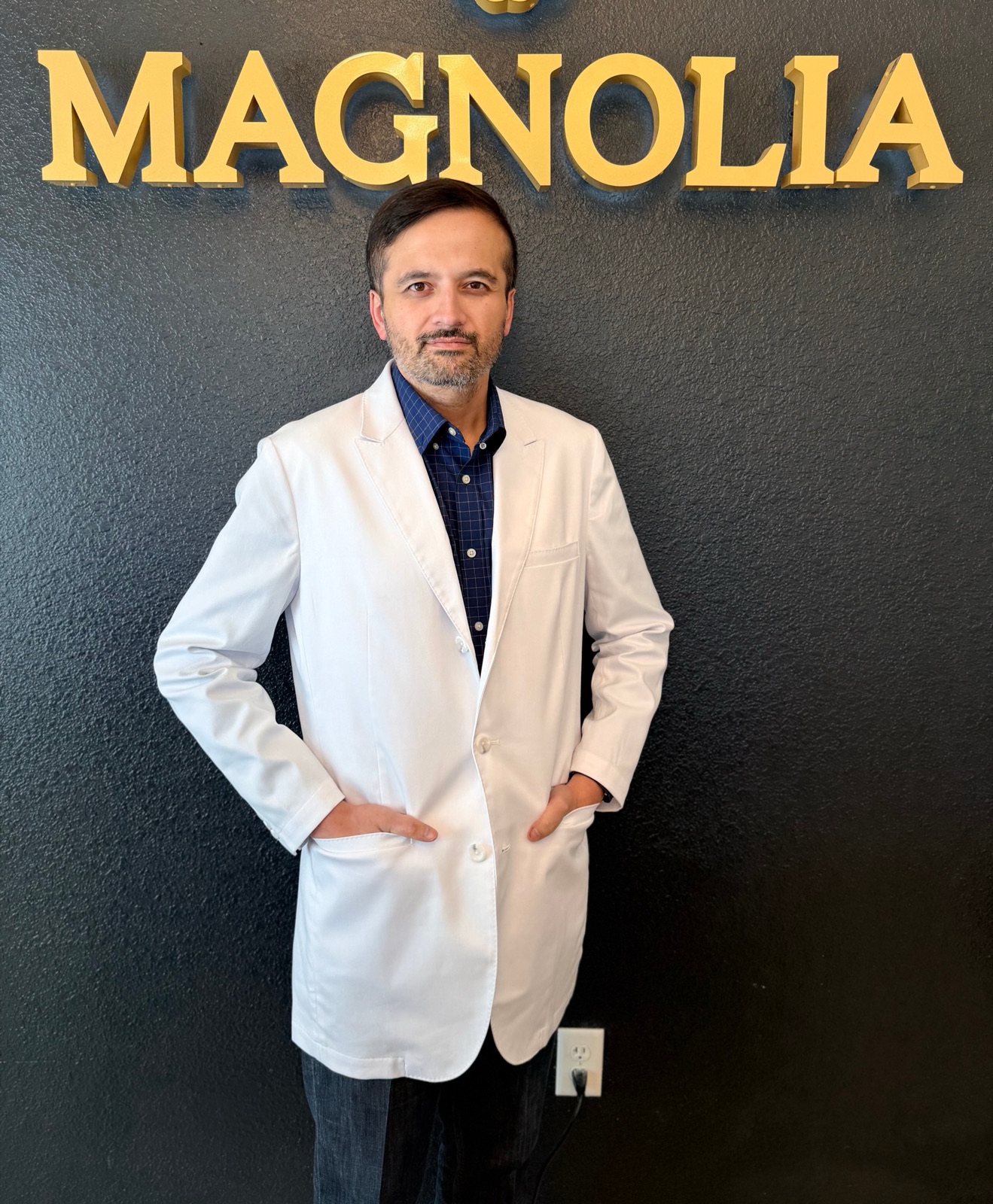
Dr. Abdullah is a board-certified internal medicine physician based in Southlake, TX, and an IFM-certified functional medicine practitioner. He focuses on men's hormone health — testosterone optimization, GLP-1 weight loss, sexual health, peptides, and longevity — and personally reviews and adjusts every protocol that leaves the clinic.
Fifteen-minute free first visit at our Southlake clinic. Serving Westlake, Trophy Club, Colleyville, Keller, Grapevine, Roanoke, and the broader Dallas–Fort Worth metro.
or call (817) 749-6946