
PRP for joints, tendons, and hair. Performed in our Southlake clinic.
PRP, stem-cell-derived therapies, and exosome protocols for joint pain, tissue injury, and age-related musculoskeletal decline. We do the modalities that have evidence, and skip the ones marketed beyond what they do.
Regenerative medicine at Magnolia Men's Health in Southlake, TX means platelet-rich plasma (PRP), exosome therapy, and biologics with reasonable evidence backing them. Strongest evidence supports knee osteoarthritis (multiple RCTs), tennis elbow, androgenetic alopecia, and ED (the P-Shot). Exosomes are used selectively as adjuncts. We do NOT offer mesenchymal stem-cell injections because the FDA has issued multiple warning letters and the human RCT evidence in consumer-clinic indications is weak.
PRP (platelet-rich plasma) is concentrated from your own blood through centrifugation. Platelets contain growth factors (PDGF, TGF-β, VEGF, IGF-1) that initiate and modulate tissue repair when delivered to a damaged joint, tendon, or hair follicle. The evidence is strongest for mild-to-moderate knee osteoarthritis,1 lateral epicondylitis,2 and early-stage androgenetic alopecia.3
We do not offer stem-cell or exosome injections. The marketing in those categories runs well ahead of the human evidence and the FDA regulatory framework, and we'd rather refer or wait than sell something we can't defend. PRP, used for the right indications and processed correctly, is the regenerative therapy that earns its place in our clinic.

We offer PRP where the data are strongest. Procedure done in-house under ultrasound guidance.
Knee, hip, or shoulder. Strongest evidence in mild-to-moderate knee osteoarthritis.1 Most patients receive 1 to 3 injections spaced 4 to 6 weeks apart, performed under ultrasound guidance.
Lateral epicondylitis (tennis elbow), patellar tendinopathy, Achilles tendinopathy. PRP outperformed corticosteroid at 6- and 12-month follow-up.2
For early-stage androgenetic alopecia. Combined with microneedling. Single treatment $1,200; the 3-treatment package $2,999 with maintenance every 6 months.3

Most clinics that offer PRP send blood out, schedule you for a return visit days later, and the product you receive is sometimes pre-mixed. We're not most clinics.
You arrive. We draw. The centrifuge runs about 12–15 minutes. Joint and tendon injections are placed under ultrasound guidance to confirm correct anatomy. Total visit: under an hour.
Most common. Mild post-injection soreness at the site for 24 to 48 hours. This reflects the early inflammatory phase of tissue repair and is expected, not a complication.
Less common. Bruising, brief swelling, transient flare of pain in the first week. Rare: infection at the injection site (we use sterile technique and ultrasound guidance to minimize risk).
Contraindications. Active infection at or near the injection site. Active malignancy. Bleeding disorders. Pregnancy. We screen at the first visit.


Platelet-rich plasma (PRP) is autologous — meaning derived from your own blood. We draw 30 to 60 mL into a sterile collection tube containing an anticoagulant, spin it in a centrifuge under specific G-force and time parameters, and isolate the plasma fraction with the highest concentration of platelets. The platelets carry alpha granules packed with growth factors: PDGF (platelet-derived growth factor), TGF-β (transforming growth factor beta), VEGF (vascular endothelial growth factor), EGF (epidermal growth factor), IGF-1 (insulin-like growth factor 1), and others. When that concentrate is injected into damaged tissue, the growth factors trigger a cascade — recruiting stem cells, stimulating angiogenesis, modulating inflammation — that drives a more aggressive repair response than baseline healing.
The strength of evidence varies by indication, and we are explicit with every patient about which category their case falls into before any series is committed.
Knee osteoarthritis. Multiple randomized controlled trials, several systematic reviews, and a 2023 Cochrane analysis support PRP as superior to corticosteroid injection and at least equivalent to hyaluronic acid for symptomatic knee osteoarthritis grades I–III. Effect duration is typically 9–18 months. Best candidates: patients with mild-to-moderate radiographic disease, preserved joint space, and meaningful functional limitation. Less ideal: end-stage bone-on-bone disease (proceed with PRP only as a temporizing measure while planning arthroplasty).
Chronic tendinopathy. Lateral epicondylitis (tennis elbow), rotator cuff tendinopathy, patellar tendinopathy, and Achilles tendinopathy all have meaningful evidence supporting PRP — especially for cases that have failed 3+ months of structured rehabilitation. The mechanism here is more about converting a chronic, non-healing tendinosis back into an acute, repairable inflammatory state.
Androgenetic alopecia (male and female pattern hair loss). Multiple peer-reviewed RCTs support PRP for early-to-mid stage hair thinning, particularly when combined with topical minoxidil, finasteride, and microneedling. Effect is most pronounced in men with active follicles still present (catch-22: if the follicles are gone, PRP cannot regrow them). Standard course is 4 monthly sessions followed by maintenance every 4–6 months.
Erectile dysfunction (the P-Shot). The penile PRP injection — the P-Shot — has growing evidence for mild-to-moderate vasculogenic ED and Peyronie's disease. We cover this in detail on the P-Shot & penile rejuvenation page; mentioned here because it is a regenerative-medicine procedure performed in our clinic.
Hip osteoarthritis: meaningful but smaller effect than knee. Plantar fasciitis: comparable to corticosteroid in head-to-head trials, with longer durability. Shoulder labral tears, meniscal tears, ACL partial tears: case-by-case decisions based on tear pattern and patient goals — PRP is not a substitute for surgical repair when surgery is indicated. We discuss the realistic likelihood of benefit with you before any series begins.
Not all PRP is created equal. The variables that affect outcome — and that most consumer-facing PRP marketing skips — are platelet concentration multiplier (target 3–7× baseline), leukocyte content (leukocyte-rich vs. leukocyte-poor PRP have different best uses), spin protocol (single vs. double spin), and total injected volume relative to the target tissue. We use a calibrated, FDA-cleared centrifuge system (not a generic blood-bank tube), report platelet counts on every preparation, and match the PRP composition to the indication. For joint osteoarthritis: leukocyte-poor PRP, 4–6× concentration. For chronic tendinopathy: leukocyte-rich PRP, 5–7× concentration. The difference is not theoretical — it shows up in outcomes.
Exosomes are nano-sized extracellular vesicles (30–150 nanometers) secreted by virtually every cell type in the body. They are the body's intercellular messaging system — packaged with proteins, lipids, microRNAs, and signaling molecules that one cell uses to influence the behavior of others. Exosomes derived from mesenchymal stem cells (MSCs) carry a particularly rich cargo of regenerative signaling molecules. The interesting part: many of the regenerative effects historically attributed to "stem cell injections" are increasingly thought to be mediated by the exosomes those stem cells secrete — not the stem cells themselves.
In our clinic, exosomes are used as adjuncts to PRP, not as standalone therapy, and only for selected indications where the additional cost is clinically justified. The most common scenario is severe chronic tendinopathy in a patient who has had a partial response to a PRP series alone, or chronic shoulder/knee pain in a patient who is not yet a surgical candidate but has plateaued on conservative care. We use exosomes derived from human umbilical-cord-derived MSCs, sourced from FDA-registered tissue banks, with full chain-of-custody documentation.
Pre-clinical and animal-model evidence for exosomes in orthopedic regeneration is genuinely promising — multiple studies show enhanced cartilage repair, reduced inflammation, and improved tendon healing compared to PRP alone. Human RCT evidence is much thinner. Most clinical-trial data is in early-phase studies; the picture is consistent with a real biological effect but the magnitude in human subjects has not been definitively quantified. We position exosomes accordingly: useful in selected cases where you and your physician decide the additional cost is worth a 20–30% probability of meaningfully better outcomes than PRP alone, not a guaranteed game-changer.
Pricing: exosome add-ons run $1,500–$3,500 depending on dose and indication. We quote in writing before any procedure and we will recommend skipping exosomes (and saving the cost) when the clinical picture doesn't justify them. Most patients getting orthopedic PRP do not need an exosome add-on. We are not in the business of inflating revenue per visit.
"Stem cell therapy" is one of the most heavily marketed and least well-evidenced treatment categories in regenerative medicine. Walk into any consumer-clinic stem-cell shop in DFW and you will be quoted $4,000 to $15,000 for an injection of "amniotic stem cells," "umbilical stem cells," or "MSCs" with promises of dramatic relief from arthritis, joint pain, or systemic inflammation. The marketing is impressive. The clinical evidence — particularly for the FDA-unapproved autologous and allogeneic stem-cell preparations sold in the consumer market — is weak and in many cases the injections do not contain meaningful numbers of viable stem cells at all.
The FDA has issued multiple warning letters and enforcement actions against clinics making unsupported stem-cell claims, including a major 2017 statement clarifying that most consumer-clinic stem-cell products meet the definition of a drug requiring FDA approval — which the vast majority do not have. Independent analyses of commercial "stem cell" products (including amniotic and umbilical preparations sold to clinics) have repeatedly found very low or zero viable stem cell content; what is being injected is largely growth factors and dead cellular debris. That is not nothing — but it is not what is being marketed, and it is not worth $10,000.
We do not offer mesenchymal stem-cell injections for orthopedic or systemic indications. We will not take your money for a treatment that the published evidence does not support. If you have been quoted a stem-cell injection by another clinic and want a second opinion, we will tell you honestly what we think — usually some version of: try evidence-based PRP first, consider exosomes if PRP is partially effective, and if both fail, the next step is more likely to be physical therapy intensification, image-guided diagnostic injection, or surgical consultation, not a more expensive stem-cell injection.
Bone-marrow aspirate concentrate (BMAC) and adipose-derived stromal vascular fraction (SVF) — both procedures that do involve harvesting and concentrating your own stem cells — have a slightly better evidence base for select orthopedic indications, but the procedures are more invasive, more expensive, and the outcome data still does not consistently outperform high-quality PRP. We refer patients interested in BMAC or SVF to academic medical centers running clinical trials rather than offering them in our consumer-clinic setting where outcome tracking is not what it should be.
PRP is well-supported, well-priced, and effective for several indications — knee osteoarthritis, chronic tendinopathy, hair restoration, and ED among the strongest. It is the foundation of our regenerative medicine offering.
Exosomes are an emerging, biologically-real adjunct we use selectively in cases where PRP alone has produced a partial response. Pricing is transparent and we will tell you when they are not worth the cost.
Consumer-clinic stem-cell injections are mostly marketing — and we will not sell them to you regardless of margin, because the evidence base does not support the claims being made elsewhere.
A typical PRP procedure takes 60–90 minutes start to finish. We draw blood from the antecubital vein, the centrifuge runs for 15–20 minutes, and during that window we set up the injection site with ultrasound guidance. The injection itself takes 5 minutes; we use a small-gauge needle and the area is anesthetized with topical and local anesthetic. Most patients tolerate it as pressure rather than pain.
Recovery: mild-to-moderate soreness or stiffness at the injection site for 24–72 hours is normal and expected — it is the inflammatory response that drives healing. We ask you to avoid NSAIDs (ibuprofen, naproxen, aspirin) for 7 days before and 14 days after the procedure, because anti-inflammatories blunt the inflammatory cascade that makes PRP work. Acetaminophen (Tylenol) is fine for pain control. Most patients return to normal daily activity within 48 hours; we typically advise no high-impact sport for 7–10 days for joint and tendon procedures, and no aggressive scalp manipulation for 24 hours after a hair PRP session.
Timeline of effect: most patients begin to notice improvement at 3–6 weeks post-procedure; peak effect is typically 8–12 weeks. For knee or shoulder osteoarthritis, a single injection often provides 9–18 months of relief. Many patients do an annual maintenance injection thereafter. For tendinopathy, we typically run a 2–3 injection series spaced 4–6 weeks apart. For hair restoration, a 4-injection series at monthly intervals is followed by maintenance every 4–6 months.
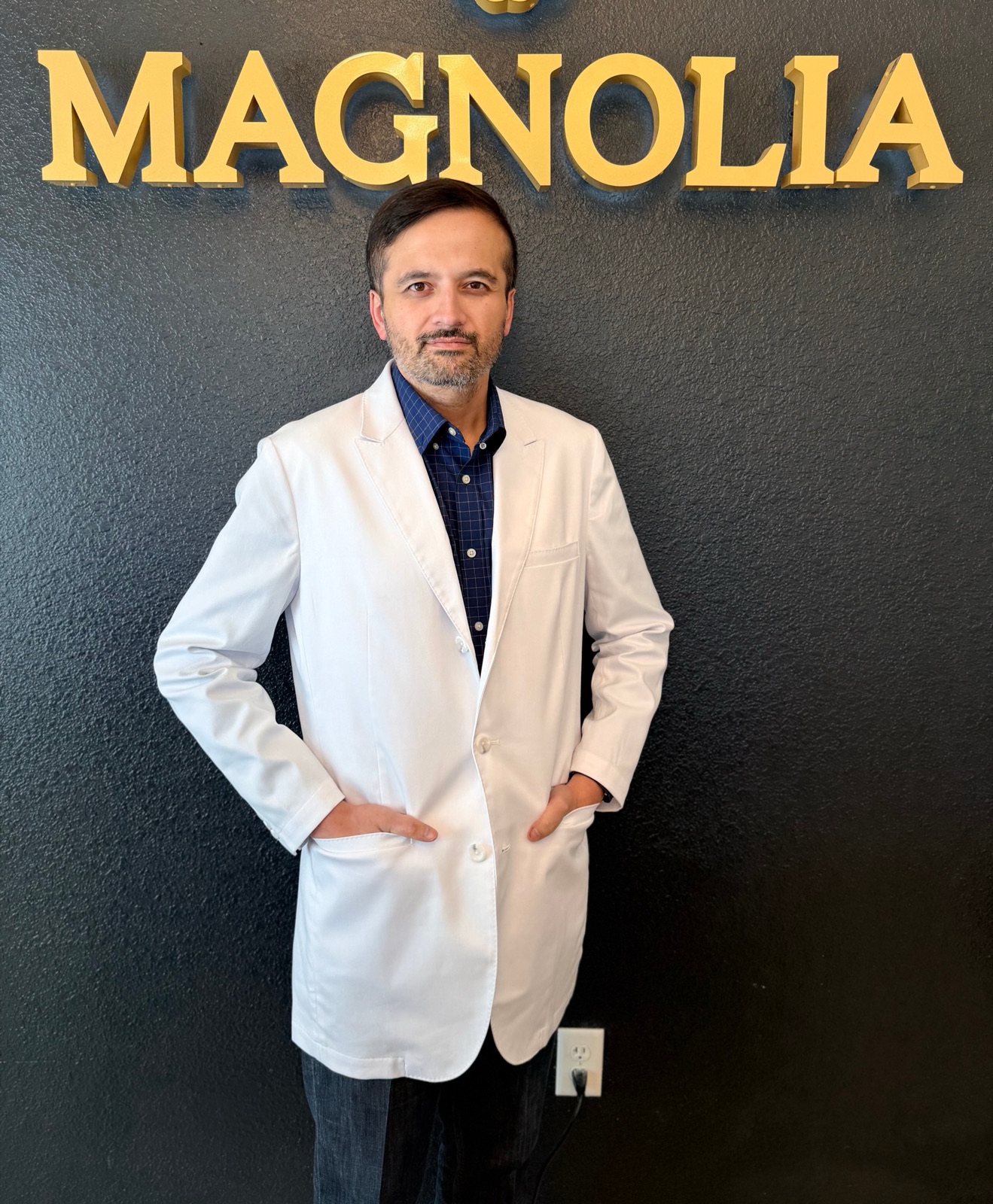
Dr. Abdullah is a board-certified internal medicine physician based in Southlake, TX, and an IFM-certified functional medicine practitioner. He focuses on men's hormone health — testosterone optimization, GLP-1 weight loss, sexual health, peptides, and longevity — and personally reviews and adjusts every protocol that leaves the clinic.
Fifteen-minute free first visit at our Southlake clinic. We'll review imaging if you have it, discuss what's appropriate, and tell you when something isn't.
or call (817) 749-6946